
 Advocacy Power Hour #1: Civic Responsibility
Voting is an important way we live
out our faith and build the beloved community.
Resources from our time together are below and equip us with the tools to take this knowledge back to our own communities.
Texas: Get Out the Vote
Texas has one of the lowest voter turnout rates in the country. In 2024, only 56.6% of eligible Texans voted in the presidential election, well below the 64.1% national average. Despite a record 18.6 million registered voters, only 11.4 million cast a ballot, meaning 7.2 million registered voters did not vote.
While voter registration is important, closing the gap between registration and actual voting is the more critical issue we need to address. For decades, researchers have studied why people don't vote and measured the impact of different get out the vote (GOTV) tactics. What they have found is not that people need to be convinced to vote, but that people mean to vote and never quite get there. Research also shows that the two most impactful GOTV tactics are personal conversations and helping someone make a plan to vote. This is why we have chosen to focus our efforts on adopting a voter circle and implementing these two actions.
Why These Two, and Not Others
Researchers have tested nearly every get out the vote tactic in controlled field experiments. A real, personal conversation increases turnout by about 8 to 9 percentage points, more than any other method tested. Walking someone through a specific voting plan, when, where, and how they're getting there, adds another 4 to 9 points on its own. Flyers, mass email, and robocalls may improve candidate name recognition, they don’t significantly increase turnout. Focusing effort on the two things the evidence says work is being a good steward of our time and resources. Having personal conversations also brings us closer to one another building a stronger community.
Step One: Adopt a Voter Circle
Your adopted “voter circle” is 3-5 people that you will engage with and encourage this election season. This isn't a list of strangers, it's people you already know but are not consistent voters.
How to Identify your people:
- Who in my life have I never actually heard talk about voting?
- Who has recently moved, turned 18, or new to Texas?
- Who might face a barrier: sole caregiver of a dependent, lives in a nursing facility, does not drive, has medical challenges?
- Do I know someone in the military, college, or at their “winter/summer home”?
- Who works shift, extended hours, or away from home for extended periods of time.
Of those, who could I realistically talk to in the next two weeks?
Pick 3 to 5 people that you want to “adopt” for this election cycle.
Step Two: Talk to your Voter Circle
Have one face-to-face conversation with each person in your adopted voter circle before October 5th. That is the deadline for voter registration, so your goal is to make sure they are registered to vote.
Example conversation starters for all types of folks!
-
- "Registration deadline is October 5th. Have you had a chance to double check you're still registered?"
- "Part of how I'm living out my faith this year is making sure the people I love have a voice. Are you registered to vote?"
- "Was voting something that was talked about growing up in your family? What was that like?"
- “I just researched my example ballot. Did you get a copy of yours yet?” (This is the one I use with my voter circle every year. Then I send them the example ballot.)
- “You know all this stuff going on with (school funding, data centers)? It is the persons we elected that are making these decisions. This November we get to show them our opinion with our vote.”
- "Hey, so I'm doing this thing where I check in with a few people I care about before the election. Got a minute?"
Step Three: Create a Voting Plan
A voting plan is not “will you vote.” That question alone has been tested and changes nothing. A voting plan is specific: what day, what time, where, how they're getting there, and what they may need to help them get to the polls. Saying it out loud is what makes the difference, because a vague intention turns into an actual commitment.
Questions:
- When are you planning to vote, early voting, by mail, or Election Day? (Have dates ready)
- What time of day or day of the week works best for you? (talk about the extended hour and weekend voting days)
- How will you get there, what support do they need? (caregiver, transportation, time off work)
- Where will you vote? (do they work/go to school in a different county than they vote in)
Resources:
Check Voter Registration – Texas Only
Voting as a Matter of Faith – https://texasimpact.org/campaigns/texas-faith-votes/voter-engagement-hub/
Texas Impact Voter Engagement Hub: with prayers, litanies connecting your faith and civic engagement; Ready To Use Voter Engagement materials, and How To Guides for Voter Engagement Projects
Texas Impact Bulletin Insert: https://texasimpact.org/resources-voting-bulletin-insert/
Holy Ballot!
Our first Advocacy Power Hour was on September 17, 2026 and focused on our civic responsibility. We are inspired by our Methodist foremothers, Sojourner Truth, Dorothy Height, Ida B. Wells, and Jessie Ames. They were on the front lines fighting for the rights of all people to vote. We honor their legacy with the same intentionality, rigor, and thoughtfulness.
We learned how to evaluate candidates by our own values, how to map our voter circle, understand what is really on the ballot, and reflect on where we feel called to show up. This was a nonpartisan hour of learning and acting together.
Led by...
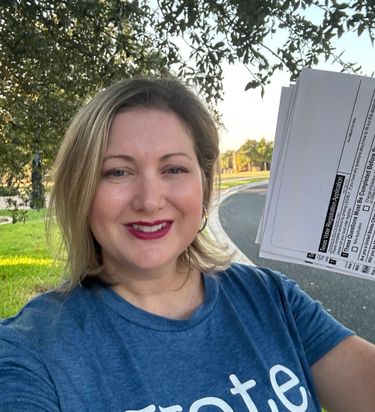
This Advocacy Power Hour was led by Jennie Birkholz, a Deaconess candidate and UWFaith member from Round Rock in the South District. Jennie understands the system well after having run for the office of State Representative in 2024. She is involved in Climate Justice work as both a consultant and as an activist.
Our Heritage in Voting Rights
Links to learn more about our foremothers' support of voting rights:
• 6 Methodist Women Who Fought for The Vote, by Heather Hawn
• Methodists and the Struggle for Women's Suffrage, by Rev. Dr. Susan Lyn Moudry
• Black women pioneers in US Methodism, Ask The UMC
